You might think your baby’s vision seems fine, but many eye problems can’t be spotted just by watching your child play or read. Vision issues often develop without obvious signs, and by the time you notice something is wrong, your child may have already struggled for months.
Your child should have their first eye exam by the time they are 6-9 months old, with follow-up visits between ages 2-5, before kindergarten, and every year throughout school. This timeline helps identify issues early, when treatment is most effective.
When Your Child Should Have Their First Eye Exam
You do not need to wait until your child can read letters on a chart to take them in for their first eye exam. Optometrists have special techniques to check vision at every age.
Your baby’s first eye exam should happen between 6 and 9 months old. This early screening checks for major issues like blocked tear ducts, eye alignment problems, or serious conditions that could affect vision development.
The next important milestone comes between ages 2-5, when your child can participate in more detailed vision tests. By this age, we can check how well both eyes work together and spot early signs of nearsightedness or farsightedness. Before your child starts kindergarten, another comprehensive eye exam helps their vision support learning to read and write.
Early Warning Signs Your Child May Need Eye Care
Your child might not tell you their vision is blurry because they often assume everyone sees the same way they do. Instead, watch for these behavioral changes that could signal vision problems:
- Frequent eye rubbing or blinking
- Covering one eye while reading or watching TV
- Tilting their head to see better
- Sitting too close to screens or books
- Complaints of headaches after school
- Difficulty concentrating on homework
- Poor performance in sports requiring hand-eye coordination
These signs do not always mean your child needs glasses, but they are worth discussing with your optometrist. Sometimes simple changes in lighting or screen time can help, while other times corrective lenses make a significant difference.
What Happens During Your Child’s First Eye Exam
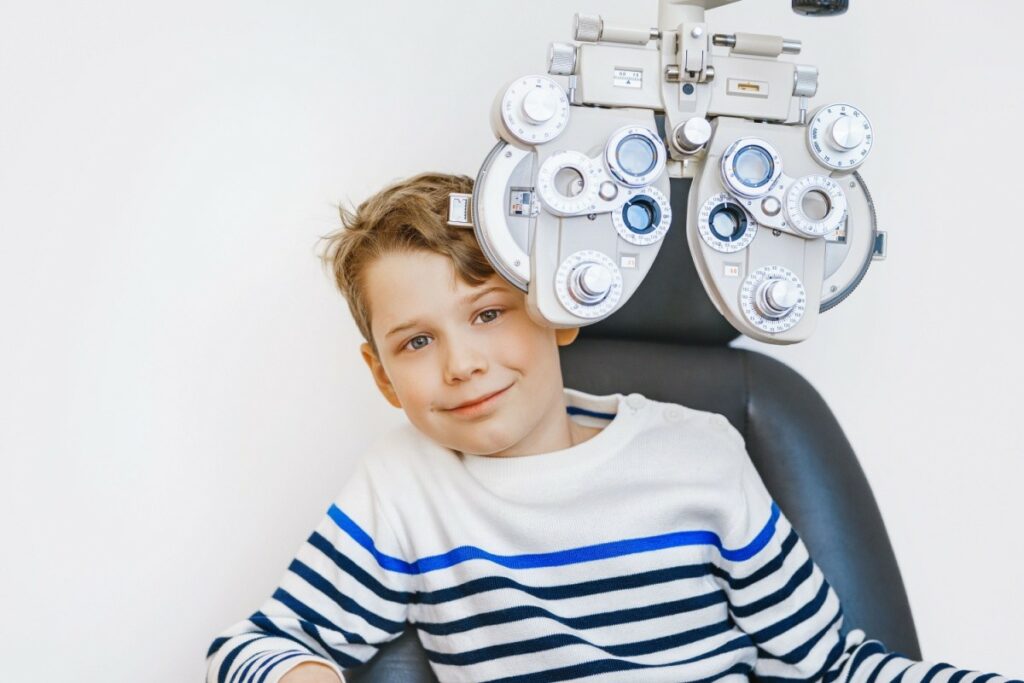
Children’s eye exams look different from adult appointments. The tests are designed to be quick, gentle, and often feel like games to young patients.
First Eye Exams (6 to 9 Months)
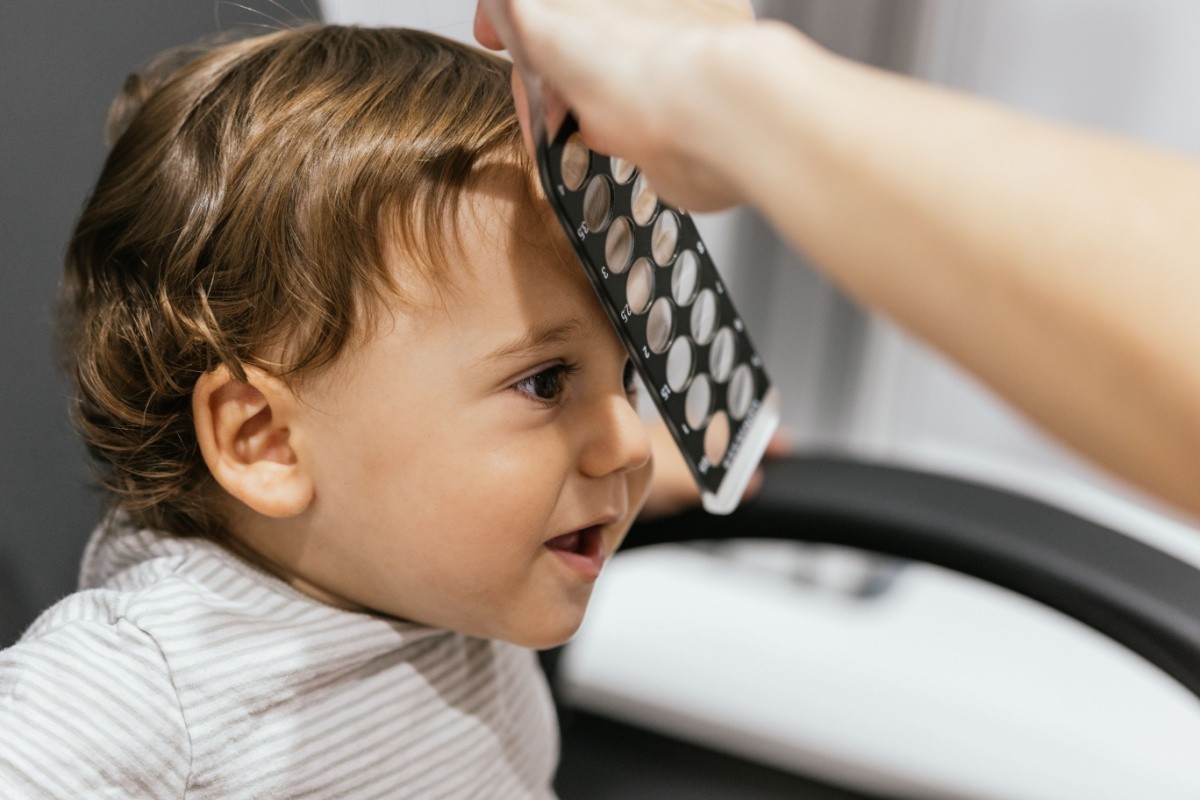
An optometrist can use toys, lights, and colorful objects to check how well your baby’s eyes track movement and focus on objects. They can also use a special instrument called a retinoscope to measure your baby’s prescription objectively, without needing any response from your child. These tests are conducted quickly because babies have short attention spans.
The exam includes assessing eye alignment to ensure both eyes point in the same direction, pupil response to light, refraction to check for nearsightedness, farsightedness, or astigmatism, and a general examination of eye health. Most babies find the experience interesting rather than scary.
Preschooler Exams (Ages 2-5)
Your preschooler can participate in picture-based vision tests using symbols like houses, circles, or animals instead of letters. Your optometrist can also check color vision and depth perception through simple activities.
Eye movement tests help determine if both eyes work together properly. These assessments often feel like games and usually take 15–20 minutes to complete.
School-Age Comprehensive Exams
Once your child knows letters, they can read standard eye charts during testing. Optometrists also perform detailed checks for nearsightedness, farsightedness, and astigmatism using special lenses.
Binocular vision tests help the doctor check that both eyes coordinate effectively for reading and sports. The complete exam also includes a thorough look at overall eye health, much like you would expect during your regular check-up.
Common Vision Problems That Develop in Children
Several vision issues commonly occur in childhood, and early detection makes treatment much more effective.
Refractive Errors
Nearsightedness often develops between the ages of 6–14. It makes distant objects appear blurry while close objects stay clear. Your child might squint to see the board at school or sit closer to the TV.
Farsightedness is common in young children and often improves naturally as they grow. When it persists or causes symptoms, it can lead to eye strain during close work such as reading or drawing. Astigmatism creates blurry vision at all distances and may lead to headaches or eye fatigue.
Eye Alignment Issues
Strabismus (crossed or misaligned eyes) and amblyopia (lazy eye). When caught early, these conditions respond well to treatment through patches, special glasses, or eye exercises. Amblyopia occurs when one eye doesn’t develop normal vision, often due to strabismus or significant differences in prescription between the two eyes. When caught early, these conditions respond well to treatment through eye patches, special glasses, or vision therapy.
Eye coordination problems can make reading difficult even when vision clarity is normal. Children might lose their place while reading or avoid close work altogether. These conditions do not improve on their own, and amblyopia treatment works most effectively when started before age 7.
Why Regular Eye Exams Matter
Vision plays a huge role in your child’s ability to learn and participate in activities. About 80% of what children learn in school is visual, making clear vision important for academic progress.
Early detection prevents some vision problems from becoming permanent. Conditions like lazy eye respond well to treatment when caught early, but become much harder to fix later.
Children with corrected vision can participate fully in activities they might have avoided when their vision was unclear. Regular monitoring also helps detect early signs of myopia, enabling timely intervention.
Give Your Kids the Vision They Deserve
Starting your child’s eye care early with a trusted team sets them up for a lifetime of healthy vision. At Warman Eyecare, we provide gentle, thorough eye exams tailored to children of all ages.
Contact our team today to schedule your child’s first eye exam and give them the clear vision they need to learn, play, and grow.